Showing posts with label quotes. Show all posts

Sunday, September 1, 2013

Standing on the Shoulders of a Wiseass

The phrase "standing on the shoulder's of giants" has a long and interesting history, generally taken to mean building on past successes of others.

One of the most famous uses of this quote is by Sir Isaac Newton  to Robert Hooke:


What Des-Cartes did was a good step. You have added much several ways, & especially in taking the colours of thin plates into philosophical consideration. If I have seen further it is by standing on the shoulders of Giants.


While reading  Is God a Mathematician by Mario Livio, I came across an explanation for this quote I hadn't heard before.  Newton, know for his rivalries and disputes, may be been taking a swipe Hooke's stature and severe stoop.  The Wikipedia article on the quote seems to refute this by indicating that Hooke and Newton were on good terms, at least when this letter was written.

On Responsibility

The ultimate result of shielding men from the effects of folly is to fill the world with fools.


Herbert Spencer

Saturday, May 26, 2012

Couple of Quotes from "Turings Cathedral"

Despite the title, Turing's Cathedral, by George Dyson, isn't primarily about Alan Turing.  Rather, it focuses on John von Neumann, another giant in computer history.  A couple of interesting quotes:

The speed of fiber deployment
Thirty years ago, networks developed for communication between people were adapted to communication between machines.  We went from transmitting data over a voice network to transmitting voice over a data network in just a few short years.  Billions of dollars were sunk into cables spanning six continents and three oceans, and a web of optical fiber engulfed the world.  When the operation peaked in 1991, fiber was being rolled out, globally, at over 5,000 miles per hour, or nine times the speed of sound: Mach 9.  (emphasis added).

Global computing efficiency
Among the computers populating this network, most processing cycles are going to waste.  Most processors, most of the time, are waiting for instructions.  Even within an active processor, as Bigelow explained, most computational elements are waiting around for something to do next.  The global computer, for all its powers, is perhaps the least efficient machine that humans have ever built.  (emphasis added)

Given how power hungry data centers are, this is a sobering number.

Wednesday, May 2, 2012

Another Beginning of Infinity quote

As a follow on to this blog post, here is another quote from The Beginning of Infinity:
Biological evolution was merely a finite preface to the main story of evolution, the unbounded evolution of memes.
As, like the first quote, this one got me thinking.  First, a definition of meme: a meme is a item of culture that is passed from person to person, group to group, society to society, generation to generation.  Memes can be jokes, ideas, conventions, cultural behavior, etc.  The term was first used by Richard Dawkins in the 1976 book The Selfish Gene, though the concept predates that.


The concept is that memes encode ideas and knowledge (something David Deutsch stresses throughout the chapter "The Evolution of Culture"), and like their DNA counterparts, memes can change, ie evolve. And they evolve much faster than genes.  Some memes such as social norms may evolve on the scale of a normal lifetime, other memes (especially internet memes) may evolve of the course of days, if not hours.

The question of 'are humans still evolving' is being debated (this article seems to indicate that there is evidence of human evolution as late as the 19th century).  While this is an interesting question, I'm not sure it is an important one.  Knowledge transmission via DNA is no longer the main method of human evolution, rather, it is via memes: a much faster, more flexible method of transmitting information.

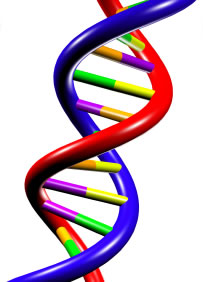
DNA is method of creating knowledge and transmitting it to the future, while on the one hand very flexible (the variety of life on this planet is simply amazing), on the other, it is inflexible in that it is undirected and slow.  The 'knowledge' stored in DNA describes an organism, that is, in theory well suited to a specific environment, in order to replicate the DNA itself.  However, that knowledge may be out of date if the environment changes


So, over the course of millions of years, chemical knowledge, storage, and transmission has lead to an organism that is capable of a different type of information storage and transmission- culture, education, writing systems, etc.  Now, this organism has embarked on another level of abstraction: digital information processing.  Vernor Vinge has an essay well worth reading, "The Coming Technological Singularity: How to Survive in the Post-Human Era" The abstract from this essay:

                     Within thirty years, we will have the technological
              means to create superhuman intelligence. Shortly after,
              the human era will be ended.

                   Is such progress avoidable? If not to be avoided, can
              events be guided so that we may survive?  These questions
              are investigated. Some possible answers (and some further
              dangers) are presented.


Are we at an inflection point, as Vernor Vinge suggests?  For millions of years, information was stored and transmitted in chemical units, genes.  These genes created an organism that, for the first time, has overcome the limitations of chemical storage.  We are capable of creating, changing, and transmitting knowledge independent of the slower, more rigid chemical means.  In fact, we are even communicating (both intentionally and unintentionally) with Deep Time.

It took millions of years to make the jump from chemical to cultural evolution.  Will we ever make the jump from cultural to silicon based digital evolution?  I don't know if we'll ever make a self-aware artificial life form, something that can pass the Turning Test, but I'm fairly certain we'll be able to make 'things' that can independently create, improve, store, and transmit knowledge.

Wednesday, March 28, 2012

"Error Correction is the Beginning of Infinity"

Reading The Beginning of Infinity by David Deutsch and came across this thought provoking quote.  The author is comparing analog and digital computers and is explaining that analog computers could never be the universal machines that digital computers have become.
 
Analog computers represent information as continuous values (think slide rule), while digital computers represent information as discrete values (think calculator).  During calculations with analog computers, external factors (such as thermal fluctuations, electrical noise, etc) can lead to the accumulation of errors, limiting the use of an analog computer.  Error correction in digital computers ensures the integrity of information throughout the calculation.  Because of this, digital computers can be used for universal computation, therefore, this represents (among other examples in the book) the beginning of infinity.