Showing posts with label GPS. Show all posts

Wednesday, August 27, 2014

Converting Garmin FIT to GPX

Garmin has a (relatively) new file format for saving GPS and other related information used in a variety of devices.  Flexible and Interoperable Data Transfer (FIT) is a binary file format that can be converted by GPSBabel.  It contains things beyond basic coordinate information usually found in a GPX file.  Things such as heart rate, temperature, cadence, sport type are included.

In the GPSBabel GUI, the format is listed as "Flexible and Interoperable Data Transfer (FIT) Activity filefit".

The command line options are as follows:
gpsbabel -i garmin_fit -f  <input file name> -o gpx -F <output file name>

Exmaple:
gpsbabel -i garmin_fit -f /Volumes/GARMIN/Garmin/Activity/2014-08-24-09-02-57-Bike.fit -o gpx -F zzz.gpx

There is a way to save/convert to GPX on the Fenix 2 itself:
After you have ended an activity, hold down the menu button, then go to History, and that will show you your recent activities. Select one, then scroll down to and select "Save as Track", and when you connect it to your computer it will be a GPX file.

Monday, November 25, 2013

Cheap stratum 1 NTP server

A cool project for an IT person or someone with a Raspberry Pi: build a small stratum one NTP server.

Enterprise NTP servers with GPS modules can cost thousands.  A Raspberry Pi based NTP server is a small form factor inexpensive way to get GPS based NTP time.  Other good uses, especially at small sites, remote offices, or co-location facilities:

  • DHCP
  • Out-of-band/management network
  • Performance monitoring, troubleshooting, packet capture

Tuesday, April 3, 2012

AT&T Femtocell security

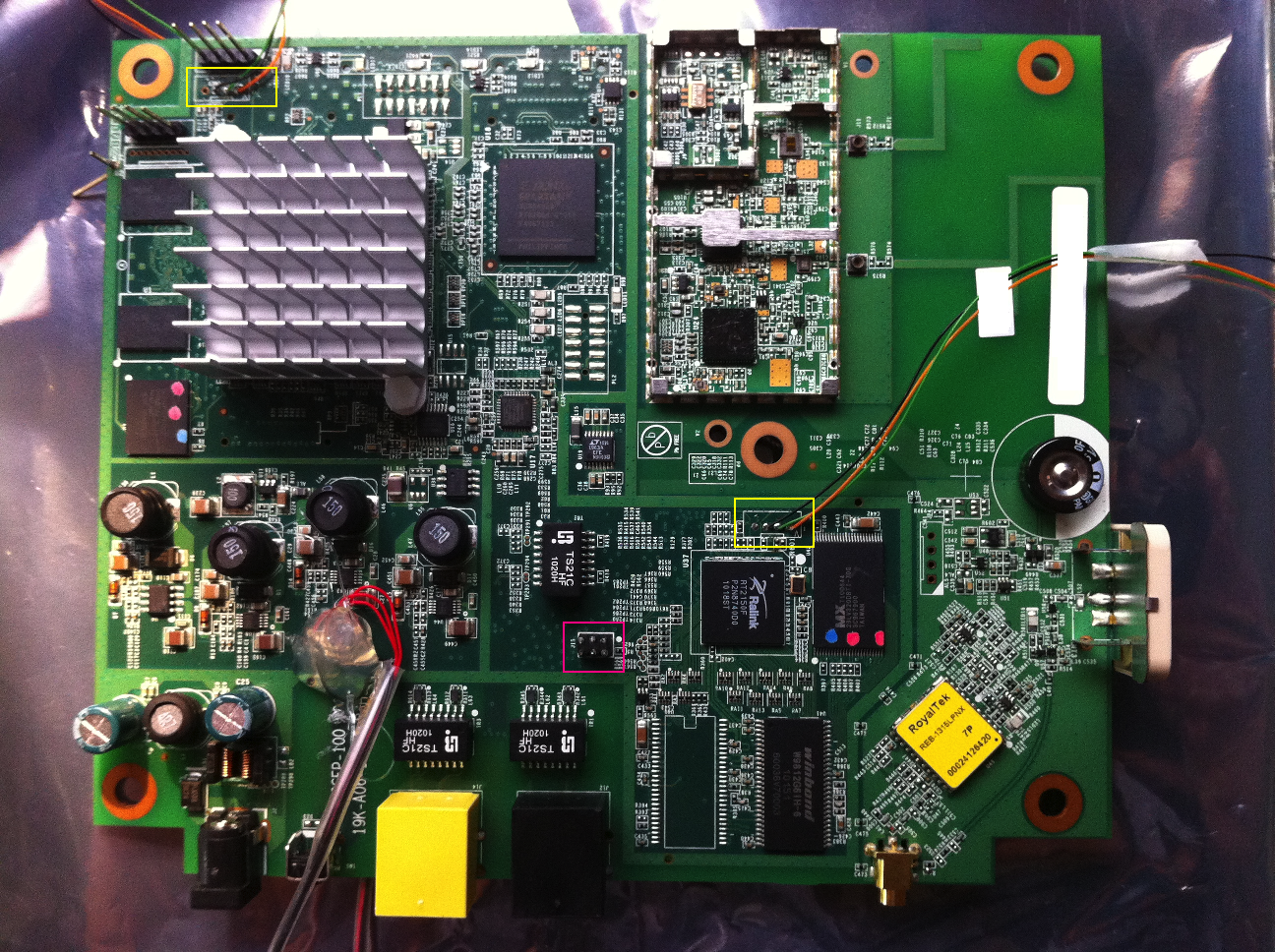
The folks over at fail0verflow :: havea great article on the internals and security of an AT&T femtocell.  Time to check eBay to see if I'm getting a new toy!

Monday, August 1, 2011

Ultrafine positioning

Technology Review reports on a new Australian company, Locata, developing a new augmentation to GPS for ultrafine positioning.


By deploying earth based transmitters that work along side the GPS signal, ultrafine positioning can be obtained.  There are very few details on how this works, such as number of transmitters, frequency, power, etc.  How does this compare with other GPS helpers such as WAAS or dGPS?

A while back there was a proposal to use television frequencies (which have  much better propagation properties) to provide indoor positioning.  I can no longer find any references to this project.  I believe it was envisioned by a guy name Rosen, who was involved with the original GPS system.